Best Shampoo for Dogs With Sensitive Skin — What Actually Works and What to Stay Far Away From
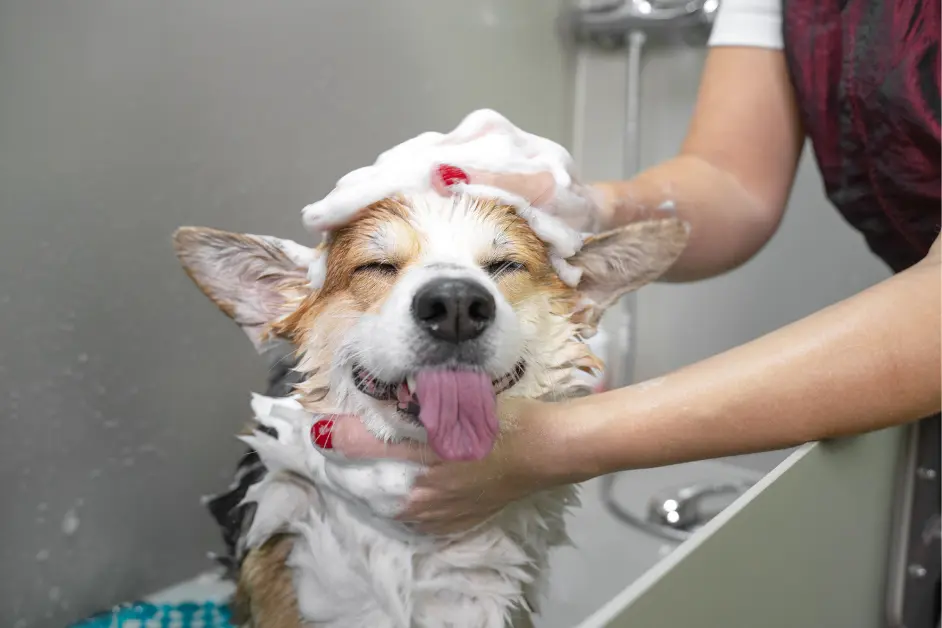
Bath time should be simple. You bring out the shampoo, your dog gives you that look you know the one you somehow manage to get them into the bathroom, and twenty minutes later they emerge smelling like something other than themselves. Done.
Except when your dog has sensitive skin, nothing about bath time is simple. You bathe them and within hours they’re scratching furiously. Their skin looks red and irritated. They’re biting at their paws. They’re rubbing their face on every piece of furniture they can find. And you’re standing there wondering whether you made things better or significantly worse.
If this sounds familiar, you’re not alone. Sensitive skin in dogs is far more common than most people realise and it’s one of the most frequently misunderstood issues in pet care. The good news is that choosing the right shampoo makes a real, tangible difference. The frustrating news is that the market is absolutely flooded with products making claims that range from misleading to outright false, and figuring out what’s actually worth your money takes some navigating.
So let’s do that navigating together. Here’s everything you actually need to know about bathing a dog with sensitive skin including what to look for, what to run from, and how to make bath time genuinely comfortable for your dog.
Why Does My Dog Have Sensitive Skin in the First Place?
Before we talk shampoo, it helps to understand what’s actually going on with your dog’s skin because sensitive skin isn’t one single thing. It’s an umbrella term that covers several different underlying issues, and the cause matters.
Some dogs are simply born with sensitive skin. Certain breeds are predisposed to it Labrador Retrievers, Golden Retrievers, French Bulldogs, Bulldogs, Cocker Spaniels, Poodles, Dachshunds, and Boxers all appear more frequently in conversations about skin sensitivity than other breeds. If your dog is one of these and has had skin issues since puppyhood, genetics are likely playing a role.
Then there are environmental allergies. In India, the combination of dust, pollen, pollution, humidity, and the particular allergens that come with each season creates a genuinely challenging environment for sensitive dogs. A dog who was perfectly fine in winter might suddenly become itchy and irritated come summer or monsoon not because anything changed in their routine, but because the air around them did.
Food allergies and intolerances are another major contributor. Dogs who are reacting to something in their diet often show it through their skin itching, redness, recurring ear infections, and hot spots that don’t seem to have an obvious environmental cause. In these cases, even the gentlest shampoo in the world won’t fully solve the problem because the trigger is internal.
And then this is the part that stings a little sometimes the shampoo itself is the problem. Harsh ingredients, artificial fragrances, chemical preservatives, and detergents that strip the skin’s natural oils can all cause or worsen skin sensitivity. A dog who seems to have suddenly developed skin issues after a grooming session may simply be reacting to whatever was used on them.
Understanding which of these is at play for your dog matters, because a shampoo change helps enormously in some situations and only partially in others. If you’ve been through multiple gentle shampoos and your dog is still suffering, it’s worth a conversation with your vet to rule out underlying allergies or dietary issues.
What to Look for on the Label
Walk into any pet store in India and you’ll find shampoo bottles making all kinds of promises. “Natural.” “Gentle.” “Hypoallergenic.” “Dermatologically tested.” These words are everywhere, and they mean almost nothing without understanding what’s actually inside the bottle.
Here’s what you actually want to see.
Oatmeal. Colloidal oatmeal is one of the most well-established, genuinely effective ingredients for sensitive skin in both humans and dogs. It soothes inflammation, relieves itching, moisturises dry skin, and forms a protective layer on the skin that helps reduce further irritation. If your dog’s skin is reactive, oatmeal-based shampoos are almost always a safe starting point. Look for “colloidal oatmeal” specifically on the ingredient list not just “natural grains” or similarly vague language.
Aloe vera. Real aloe vera not a synthetic derivative has genuine anti-inflammatory and moisturising properties. It calms irritated skin, speeds up minor healing, and leaves the coat feeling soft. Paired with oatmeal, it’s a combination that works well for most sensitive-skinned dogs.
Coconut oil or chamomile extract. Both are gentle, naturally derived, and have soothing properties that complement the main active ingredients. Chamomile in particular has mild anti-inflammatory effects that can help calm reactive skin.
A pH-balanced formula. This is crucial and often overlooked. A dog’s skin pH sits between 6.5 and 7.5 more neutral than human skin. Human shampoos, which are formulated for our more acidic skin pH, disrupt a dog’s skin barrier and cause dryness and irritation even when they contain otherwise gentle ingredients. Any shampoo you use on your dog should be specifically formulated for dogs and state that it’s pH balanced.
Short ingredient lists. Here’s a general rule of thumb that applies to pretty much all skincare, human or pet: the shorter and more recognisable the ingredient list, the less likely it is to contain something your dog will react to. If you need a chemistry degree to read the back of the bottle, that’s not necessarily a good sign for a dog with sensitive skin.
What to Avoid — And Why
This section matters just as much as the one above, because the wrong shampoo doesn’t just fail to help it actively makes things worse.
Artificial fragrances. This is the big one. Synthetic fragrances are among the most common causes of skin reactions in dogs, and they’re in an enormous number of pet shampoos because they make the product smell appealing to the humans buying it. Your dog does not care how they smell to you. What they care about is whether their skin is comfortable. “Fragrance” or “parfum” on an ingredient list is a red flag for any dog with skin sensitivity look for fragrance-free options or products scented only with natural essential oils in safe concentrations.
Sulfates. Sodium lauryl sulfate (SLS) and sodium laureth sulfate (SLES) are the foaming agents responsible for that satisfying lather most shampoos produce. They’re also potent detergents that strip the natural oils from your dog’s skin and coat, leaving it dry, tight, and vulnerable to irritation. Many dogs with sensitive skin do dramatically better once their owner switches to a sulfate-free formula.
Parabens. Parabens are preservatives they extend the shelf life of cosmetic and grooming products. They’ve been the subject of increasing scrutiny for both humans and animals due to potential hormonal disruption. For a dog with already-reactive skin, they’re an unnecessary risk. Look for “paraben-free” on the label.
Alcohol. Certain alcohols, particularly isopropyl alcohol and ethanol, are drying and irritating to sensitive skin. They’re sometimes used in grooming products as antiseptics or to help ingredients penetrate the skin, but for a dog who’s already struggling, they add fuel to the fire.
Human shampoo any of it. Baby shampoo, “gentle” human shampoos, your own expensive hair products none of these are appropriate for regular use on dogs, regardless of how mild they seem. The pH difference alone makes them unsuitable. This is one of those myths that keeps circulating despite being pretty clearly debunked. Just don’t.
What About Medicated Shampoos?
Medicated shampoos occupy a different category entirely they’re therapeutic products that contain active pharmaceutical ingredients like chlorhexidine, ketoconazole, benzoyl peroxide, or salicylic acid, each targeting specific conditions.
Chlorhexidine is antibacterial and antifungal used when bacterial or yeast skin infections are present. Ketoconazole targets fungal infections specifically. Benzoyl peroxide is used for follicular flushing in dogs with certain types of skin disease. Salicylic acid helps with scaling and seborrhoea.
These aren’t everyday shampoos. They’re treatments. And they should genuinely only be used under veterinary guidance not because they’re dangerous necessarily, but because using the wrong medicated shampoo for the wrong condition either won’t help or could make things worse. If your dog’s skin issues are severe, recurring, or accompanied by hair loss, thickened skin, or strong odour, please see your vet before reaching for a medicated product off the shelf.
How You Bathe Your Dog Matters Too
The best shampoo in the world won’t help much if the bathing process itself is aggravating your dog’s skin. A few things worth paying attention to.
Water temperature matters more than most people think. Lukewarm not warm, not hot is what sensitive skin needs. Hot water opens pores and increases the skin’s reactivity, which is the last thing you want.
Don’t over-bathe. Dogs with sensitive skin generally do better with less frequent baths, not more. Every two to four weeks is appropriate for most dogs bathing more often than this strips the skin’s natural protective oils faster than they can replenish. If your dog needs freshening up between proper baths, a damp cloth wipe-down or a dry shampoo specifically formulated for sensitive skin is a better option.
Rinse thoroughly. Shampoo residue left on the skin is a significant and very common cause of post-bath itching. Rinse for longer than you think necessary. Rinse again. Then rinse once more. Shampoo that hasn’t been fully washed out will irritate even the most robust skin, let alone sensitive skin.
Dry gently. Pat, don’t rub, rubbing creates friction that inflames sensitive skin. If you use a blow dryer, keep it on a cool or low setting and move it continuously rather than directing heat at one spot.
A Few Shampoo Types Worth Knowing About
Without recommending specific brands because product availability, formulation, and quality can change, and what’s available in your city in India may differ from what’s available elsewhere here are the categories of shampoo that generally work well for sensitive-skinned dogs.
Oatmeal and aloe shampoos are the most universally gentle and are a good first port of call for mild to moderate skin sensitivity. They’re widely available in India now, both in pet stores and online.
Hypoallergenic, fragrance-free formulas are designed specifically to minimise the chance of reactions. They tend to have shorter ingredient lists and avoid the most common irritants. These are particularly useful if you don’t yet know what your dog is reacting to.
Natural or organic shampoos using plant-derived ingredients can be excellent for sensitive dogs, but read the labels carefully “natural” doesn’t automatically mean safe or gentle, and some natural essential oils are actually irritating or toxic to dogs in certain concentrations. Tea tree oil, for instance, is often marketed as a natural skin remedy but is toxic to dogs in meaningful amounts.
Conditioning shampoos with ceramides or vitamin E help restore and maintain the skin barrier, which is often compromised in dogs with sensitive or allergic skin. If your dog’s coat tends to be dry and dull alongside the skin sensitivity, a conditioning formula addresses both issues at once.
When Shampoo Alone Isn’t Enough
If you’ve switched to a gentle, appropriate shampoo and your dog is still scratching, still red, still clearly uncomfortable please don’t just keep trying different products and hoping one of them will be the magic answer. There may be something else going on that shampoo can’t fix.
Recurring skin issues in dogs warrant a veterinary visit. Your vet may recommend skin scraping tests, allergy testing, dietary trials, or prescription treatments depending on what they find. Skin conditions that go undiagnosed and untreated for a long time can become chronic and significantly harder to manage catching them early makes a real difference.
Before You Head Back Inside
Choosing the right shampoo for a dog with sensitive skin isn’t as complicated as the market makes it seem once you know what to look for and what to leave on the shelf. Oatmeal, aloe, pH balance, no sulfates, no artificial fragrance, no parabens. That’s really the core of it.
But more than any single product, what sensitive-skinned dogs need is an owner who pays attention. Watches for patterns. Notices what helps and what doesn’t. Doesn’t dismiss persistent scratching as “just something they do.”
Your dog’s skin is telling you something every time it reacts. Learning to listen to it and making choices that actually respond to what it’s saying is one of the most genuinely loving things you can do for them.
At Yes Paws, we believe every dog deserves to feel comfortable in their own skin. Literally. Does your dog have sensitive skin? Tell us what’s worked for you in the comments your experience might be exactly what another pet parent needs to read today.

yespaws
Recent Posts
-
 How to Manage Pets in Small Apartments September 12, 2026
 -
 Indoor Games to Keep Pets Active September 11, 2026
 -
 How Much Exercise Does Your Dog Really Need September 10, 2026
 -
 First-Time Cat Owner? Here’s How to Groom Your Cat Safely September 9, 2026
 -
 Safety Tips for Night Walks with Dogs September 8, 2026