Dog Boarding vs Pet Sitting: Which Is Actually Better for Your Dog?
You’ve got a trip coming up. Maybe it’s a long-overdue family vacation, a work trip that can’t be rescheduled, or a wedding in another city that’s going to stretch across four days. Whatever it is, you’re excited and then, almost immediately, the excitement gets complicated by a single thought that every dog owner knows intimately well.
What do I do with my dog?
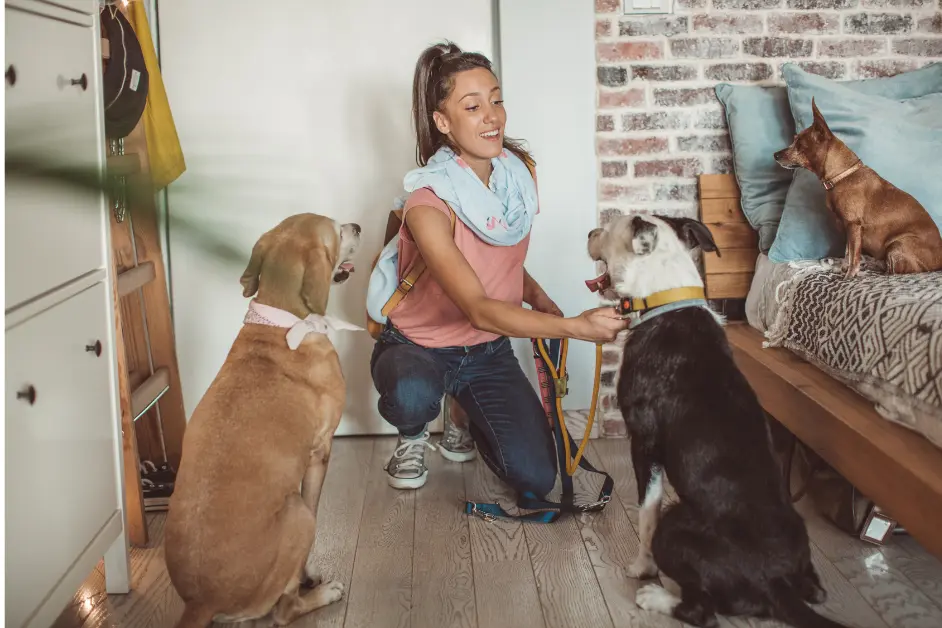
It’s one of those questions that sounds simple until you actually start thinking about it. You want your dog to be safe. You want them to be comfortable. You want them to not spend four days anxious and confused, wondering why their person disappeared. And you want to be able to enjoy your trip without checking your phone every twenty minutes convinced something has gone wrong.
The two most common options people land on are dog boarding and pet sitting. Both are legitimate, both have devoted fans, and both have real drawbacks that don’t always get mentioned upfront. So let’s talk about it honestly what each option actually looks like in practice, who it works for, who it doesn’t, and how to figure out which one is the right call for your specific dog.
First, Let’s Get Clear on What Each Option Actually Is
This sounds obvious, but it’s worth being precise because these terms get used loosely and sometimes interchangeably, which creates confusion.
Dog boarding means your dog goes to stay somewhere else while you’re away. This could be a professional boarding kennel or facility think of it as a hotel for dogs, with kennels or rooms, staff on-site, and usually some level of supervised play or exercise. It could also be a smaller home-based boarding setup where a family or individual takes in a few dogs at a time. Either way, your dog is leaving your home and living in someone else’s space.
Pet sitting means someone comes to your dog either visiting your home at scheduled times throughout the day to feed, walk, and spend time with them, or actually staying in your home overnight for the duration of your trip. Your dog stays in their own environment. The people and routine change, but the space remains familiar.
That fundamental difference your dog going to a new place versus someone coming into your dog’s place is at the heart of everything else we’re about to discuss.
The Case for Dog Boarding
Let’s give boarding its proper due, because for a lot of dogs and a lot of situations, it’s genuinely the better option. The biggest advantage of a good boarding facility is supervision. At a professional kennel or boarding centre, there is someone physically present often round the clock which means if something goes wrong at 2am, there’s a human being there to deal with it. For dogs with health conditions, dogs who are prone to anxiety-driven destructive behaviour, or dogs who are just generally accident-prone, this level of oversight is genuinely reassuring.
Good boarding facilities also offer structured social interaction. If your dog is a social creature who goes absolutely feral with joy every time they see another dog, a boarding facility with supervised group play sessions can actually be a really positive experience for them. Some dogs come back from boarding looking like they’ve been at summer camp tired in the best possible way, having spent four days running around with a pack of new friends.
There’s also the routine element. Professional boarding facilities operate on schedules fixed feeding times, walk times, sleep times. For dogs who thrive on predictability, this structure can be comforting even in an unfamiliar environment.
And if you genuinely don’t have anyone you trust to either visit your home or care for your dog well, boarding removes the personal equation entirely. You’re paying professionals whose entire job is this.
But Boarding Isn’t Perfect Not Even Close
Here’s where we need to be honest, because the boarding experience varies enormously depending on the facility and in India, the range between an excellent boarding centre and a poor one is genuinely wide.
The most significant downside of boarding is the environment itself. No matter how good a facility is, it is not your home. It smells different, sounds different, and feels different. For dogs who are anxious, timid, shy, or deeply bonded to their home environment, being dropped into an unfamiliar space full of unfamiliar dogs and unfamiliar people can be profoundly stressful. Some dogs adapt within a day. Others spend the entire stay unsettled.
Then there’s the illness factor. Group environments mean shared air, shared spaces, and for some facilities, shared water and food areas. Kennel cough a highly contagious respiratory infection is the most common concern, but it’s not the only one. Even facilities that require vaccination records before admission can’t eliminate the risk entirely. If your dog has a compromised immune system or is particularly sensitive, this is worth weighing carefully.
And while we’re being honest not all boarding facilities in India are well-maintained. Staff-to-dog ratios matter. Cleanliness matters. The quality of kennels, the amount of outdoor time, the level of individual attention dogs receive these vary dramatically from one place to another. Visiting before you commit is not optional. It’s essential.
The Case for Pet Sitting
For a very large category of dogs, pet sitting is the hands-down better option. And the reason is elegantly simple: your dog stays home.
Think about what home means to your dog. It’s where their smell is. Where their bed is. Where they eat, where they sleep, where they spend the vast majority of their waking hours. Home is the single most familiar place in your dog’s world, and familiarity is enormously comforting to animals.
A pet sitter who comes to your home or stays in it allows your dog to maintain most of their normal routine in the place where they feel most secure. This is particularly significant for dogs with separation anxiety, dogs who are reactive around other animals, elderly dogs who don’t do well with disruption, or dogs who have had difficult histories and find new environments genuinely frightening.
It’s also significantly better for dogs who are ill or recovering from something. Keeping a dog with a medical condition in their own space, with their own vet’s number already known and their medications in the cupboard, is just more practical and less stressful for everyone.
There’s a one-on-one quality to good pet sitting that group boarding simply can’t replicate. A dedicated pet sitter is there for your dog not split between twelve dogs in a facility. They’re the person who notices when your dog didn’t finish their dinner, or seems a little off, or needs an extra walk. That individual attention has real value.
Where Pet Sitting Falls Short
The honest drawbacks of pet sitting come down to three things: trust, availability, and overnight coverage. Finding a pet sitter you actually trust is harder than it sounds. You’re giving someone access to your home. You’re handing over the welfare of your dog to a person you may not know particularly well. References matter here. So does a trial run ideally having the pet sitter visit a few times before your trip so your dog already knows them, and so you can observe how they interact. A sitter your dog visibly likes is a sitter worth keeping.
Availability is a real constraint in many Indian cities. Professional pet sitters people who do this as their actual job rather than as a favour are more common in metros like Mumbai, Bangalore, Delhi, and Pune than elsewhere. In smaller cities or towns, your options may be limited to friends and family, which brings its own set of complications.
And drop-in visits, while great for many dogs, leave gaps. A sitter who comes three times a day is still leaving your dog alone for extended periods. For a dog who genuinely can’t tolerate being alone, this may cause more anxiety than a boarding facility with constant human presence. Overnight home sitting solves this, but it’s not always available or affordable.
How to Actually Decide
There isn’t a universal right answer here. There’s only the right answer for your dog. And figuring that out means being honest about a few things. Think about your dog’s personality first. Is your dog confident, social, and adaptable? Do they get excited around other dogs? Boarding especially a good facility with group play might genuinely be enjoyable for them. Is your dog anxious, shy, home-loving, or reactive? Pet sitting, especially in-home overnight sitting, is almost certainly the better choice.
Think about age and health. Elderly dogs and dogs with medical needs almost always do better with pet sitting. The disruption of a new environment and the potential illness exposure of a boarding facility are risks that simply aren’t worth taking for a dog who’s already dealing with health challenges.
Think about the length of your trip. For a two-night absence, drop-in pet sitting is often perfectly fine for most dogs. For a ten-day trip, more coverage is needed either overnight sitting or boarding at a place your dog is already comfortable with.
And think about what you can realistically find in your city. In many parts of India, the options are still limited. Ask your vet for recommendations. Ask fellow dog owners in your neighbourhood or building. Word of mouth for both boarding facilities and reliable pet sitters is often the most trustworthy way to find someone good.
A Few Non-Negotiables Whichever Option You Choose
Before you finalise anything, make sure whoever is caring for your dog has your vet’s contact information. Not just the number the relationship context. Let your vet know someone else will be handling your dog while you’re away.
Leave written care instructions. Not just feeding amounts and timing, but your dog’s quirks, their fears, what calms them down, what sets them off, which sounds make them nervous, whether they tend to eat their socks when stressed. The more specific you are, the better equipped the person caring for them will be.
Do a trial run if at all possible. A single overnight stay at a boarding facility before your actual trip can make an enormous difference in how your dog settles in. A pet sitter who visits twice before you leave is already familiar to your dog by the time they’re actually needed. And update your dog’s ID tags and microchip information before you travel. It’s the kind of thing we all mean to do and never quite get around to do it now.
Before You Head Back Inside
Both dog boarding and pet sitting can be wonderful options. Both can also be the wrong choice if they’re not matched to the right dog in the right situation. The dogs who thrive in boarding are not the same dogs who thrive with a quiet home sitter. And that’s completely fine it’s just about knowing your dog well enough to make the call that’s right for them.
Spend a little time thinking about who your dog actually is, what they find comforting, and what tends to unsettle them. The answer to the boarding versus pet sitting question is usually sitting right there. At Yes Paws, we know how much you love your dog and how much it matters to feel confident they’re okay when you can’t be there. We’re here to help you make the choices that give you both peace of mind.
Have you tried both boarding and pet sitting? Tell us what worked best for your dog in the comments your experience might help another pet parent make their decision.

yespaws
Recent Posts
-
 How to Manage Pets in Small Apartments September 12, 2026
 -
 Indoor Games to Keep Pets Active September 11, 2026
 -
 How Much Exercise Does Your Dog Really Need September 10, 2026
 -
 First-Time Cat Owner? Here’s How to Groom Your Cat Safely September 9, 2026
 -
 Safety Tips for Night Walks with Dogs September 8, 2026