What Human Food Can I Give My Pet? Safe Foods for Dogs and Cats
There’s a moment every pet owner knows well. You’re sitting at the kitchen table, fork in hand, and two eyes soulful, unblinking, absolutely irresistible are locked onto your plate. Your dog tilts their head. Your cat winds around your ankles. And you think, just a little bite won’t hurt, right? Sometimes it won’t. But sometimes it absolutely will and the difference matters more than most people realise.
The good news is that sharing food with your pet doesn’t have to be a guessing game. There are plenty of wholesome, everyday foods that are not only safe for your furry family members but genuinely good for them. The key is knowing which ones make the approved list and understanding why the others don’t. This guide is your go-to resource for pet-safe foods you can feel great about sharing, along with a few important reminders to keep snack time happy and healthy for everyone at the table.
Why What You Feed Your Pet Outside Their Bowl Matters
Pet owners collectively spend billions on premium pet food every year, carefully reading labels and choosing formulas designed for optimal nutrition. Yet many of those same owners hand over table scraps without a second thought not out of negligence, but out of love and a genuine desire to include their pet in daily life.
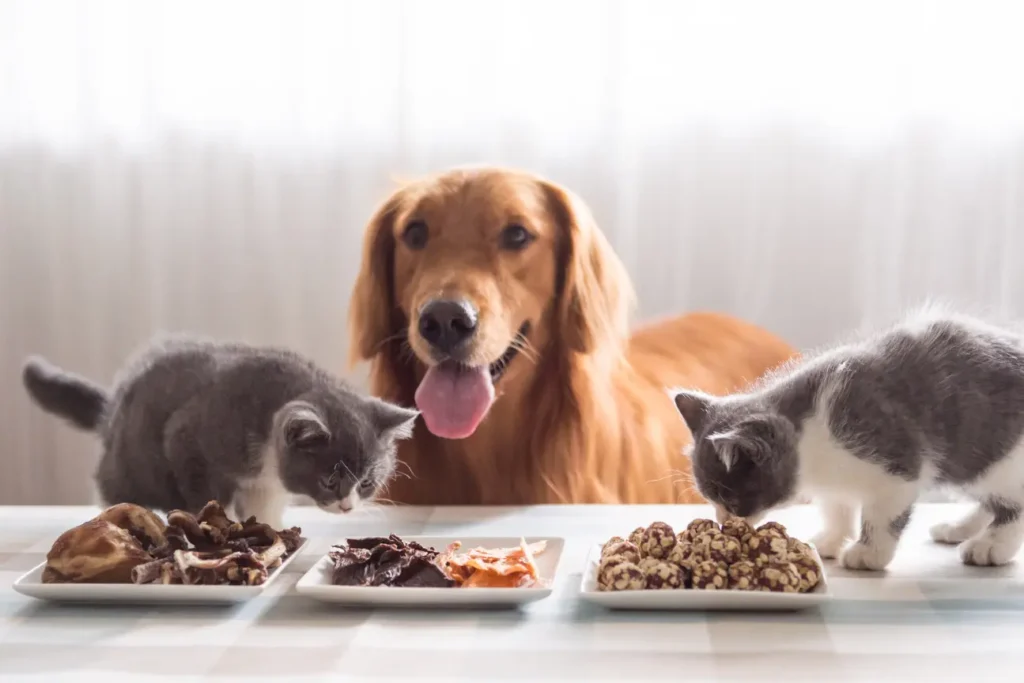
The problem is that a dog or cat’s digestive system processes food very differently from ours. Some human foods that are completely harmless to us contain compounds that are toxic to pets. Others are safe in small amounts but harmful in larger quantities. And some are genuinely beneficial packed with vitamins, fiber, and antioxidants that complement a pet’s regular diet beautifully. Understanding the difference isn’t just about preventing emergencies. It’s about making informed, loving choices every single day.
Safe Foods to Share with Your Dog
Blueberries
Blueberries are one of the best snacks you can offer your dog, full stop. They’re loaded with antioxidants, vitamin C, vitamin K, and fiber and most dogs love their sweet, slightly tart flavor. Their small size also makes them a convenient training treat or a fun toss-and-catch game in the yard. Fresh or frozen blueberries work equally well. Just skip the canned versions, which often come packed in sugar syrup.
Carrots
Crunchy, naturally sweet, and incredibly versatile — carrots are a fantastic dog snack. They’re low in calories, high in beta-carotene (which supports eye health), and the act of chewing them provides light dental benefits by helping scrape plaque off teeth.
Raw carrots can be given whole to larger dogs as a chew treat, or sliced into rounds for smaller breeds. Cooked carrots are equally fine, though they lose a bit of their satisfying crunch.
Watermelon
On a hot day, there are few things a dog appreciates more than a cool chunk of watermelon. It’s over 90% water, making it a wonderfully hydrating treat, and it delivers vitamins A, B6, and C alongside potassium.
The rule here: always remove the seeds and the rind before sharing. Seeds can cause intestinal blockage, and the rind is tough on digestion. Stick to the pink flesh and you’re golden.
Cooked Chicken or Turkey (Plain)
Plain, cooked poultry is one of the most dog-friendly proteins around. It’s easy to digest, high in lean protein, and genuinely appealing to even picky eaters. Many veterinarians actually recommend plain boiled chicken as a gentle food for dogs recovering from stomach upset.
The critical word here is plain. No seasoning, no garlic, no onion, no butter, no sauces. Bones should also be removed entirely — cooked poultry bones can splinter and cause serious internal injury.
Pumpkin
Plain pumpkin puree (not the spiced pie filling — just pure pumpkin) is something of a superfood for dogs. It’s rich in soluble fiber, which supports healthy digestion and can help regulate both diarrhea and constipation. It also contains vitamin A, potassium, and iron.
A spoonful stirred into your dog’s regular food is a simple way to add nutritional value and digestive support in one go.
Peanut Butter
A classic for good reason. Most dogs are absolutely obsessed with peanut butter, and the plain, unsweetened variety is a perfectly safe treat in moderation. It provides healthy fats, protein, niacin, and vitamins B and E.
The non-negotiable caveat: always check the label for xylitol, an artificial sweetener commonly added to “natural” or reduced-sugar peanut butters. Xylitol is extremely toxic to dogs, even in tiny amounts. If xylitol is listed as an ingredient, put it back on the shelf.
Green Beans
Plain green beans — steamed, raw, or frozen — are a low-calorie, fiber-rich snack that many dogs genuinely enjoy. They’re particularly popular as a treat substitute for dogs on weight management plans, since they’re filling without adding significant calories.
Skip canned green beans with added sodium, and avoid any preparation involving oils, seasonings, or garlic.
Eggs
Fully cooked eggs are a nutritional powerhouse for dogs. They’re packed with protein, riboflavin, selenium, and amino acids that support muscle health and a shiny coat. Scrambled or hard-boiled (plain, no salt or butter) are both great options.
Raw eggs are a topic of debate — some proponents swear by them, but they carry a risk of salmonella and can interfere with biotin absorption over time. Cooked is the safer, simpler choice.
Safe Foods to Share with Your Cat
Cats are obligate carnivores, meaning their nutritional needs are fundamentally different from dogs and from ours. They require specific nutrients found almost exclusively in animal tissue, and they have a much more limited range of safe “human food” options. That said, there are still some worthwhile choices.
Cooked Salmon or Tuna (Occasionally)
Fish is naturally appealing to cats, and small amounts of plain, cooked salmon or tuna offer omega-3 fatty acids that support skin, coat, and joint health. It makes a lovely occasional treat. The emphasis here is on occasional. Too much fish can actually cause a vitamin E deficiency in cats, and canned tuna packed in brine is too high in sodium for regular consumption. Think of fish as a treat, not a staple.
Plain Cooked Chicken or Turkey
Just as with dogs, plain cooked poultry is one of the safest and most appropriate things you can share with your cat. It’s biologically appropriate, easy to digest, and most cats find it irresistible. Keep it completely plain no seasoning, no bones, no skin.
Cooked Eggs
A small amount of plain scrambled or hard-boiled egg is a safe, protein-rich treat for cats. Eggs provide taurine, an amino acid that is absolutely essential for feline heart and eye health. Just keep portions small and preparation completely plain.
Cantaloupe
This one surprises many cat owners, but a small piece of plain cantaloupe is safe for cats and some actually seem drawn to it — possibly because the amino acids in the fruit mimic the scent of meat proteins. It offers beta-carotene and hydration, though it should only be given sparingly due to its natural sugar content.
Cooked Pumpkin
Pumpkin works as well for cats as it does for dogs. Plain pumpkin puree can help ease constipation and support healthy digestion a genuine benefit for cats, who are prone to hairball-related digestive issues. A teaspoon added to their food is plenty.
A Few Universal Ground Rules
Before you start turning snack time into a shared experience, keep these principles in mind regardless of which pet you’re feeding.
Moderation is everything. Even safe foods can cause stomach upset, weight gain, or nutritional imbalance when given in excess. Treats and extras including healthy human foods should make up no more than 10% of your pet’s daily caloric intake.
Plain is almost always safer. The simpler the preparation, the better. What’s dangerous for your pet isn’t usually the base ingredient it’s the garlic, onion, seasoning, butter, oil, or sauce that comes along for the ride.
Some foods are absolutely off-limits. No list of safe foods is complete without a firm reminder of what to avoid entirely: grapes and raisins (toxic to dogs and cats), onions and garlic (toxic to both), chocolate, xylitol, alcohol, macadamia nuts, avocado, and raw dough. These aren’t foods to give “just a little” of they have no safe threshold for pets.
When in doubt, ask your vet. Every pet is an individual. Age, breed, health conditions, and medications can all affect how a pet responds to certain foods. Your veterinarian is always the best resource for personalized nutrition guidance.
Sharing Food Is an Act of Love Do It Wisely
There’s something genuinely warm about sharing a meal or even just a small bite with the creatures who share your home and your heart. Food is connection, and your pet understands that on some level too.
The goal isn’t to eliminate that sharing. It’s to make it smarter, safer, and more meaningful. When you reach for a blueberry to toss to your dog, or set aside a small piece of plain chicken for your cat, you’re not just giving them a snack. You’re making a choice that reflects how well you know them and how much you care.
That’s what being a great pet parent looks like. And at Yes Paws, we think that’s worth celebrating one safe, wholesome bite at a time.
Always consult your veterinarian before making significant changes to your pet’s diet or introducing new foods regularly. This article is intended for general informational purposes. Have a favorite pet-safe snack your dog or cat goes crazy for? Share it in the comments we’d love to hear from the Yes Paws community!

yespaws
Recent Posts
-
 How to Manage Pets in Small Apartments September 12, 2026
 -
 Indoor Games to Keep Pets Active September 11, 2026
 -
 How Much Exercise Does Your Dog Really Need September 10, 2026
 -
 First-Time Cat Owner? Here’s How to Groom Your Cat Safely September 9, 2026
 -
 Safety Tips for Night Walks with Dogs September 8, 2026