Indoor Games to Keep Pets Active
Rainy afternoons, extreme summer heat, harsh winter cold, or simply a hectic schedule that leaves little time for a long outdoor walk, there are plenty of reasons pet owners occasionally need to keep exercise indoors. The good news is that a lack of outdoor space or time doesn’t have to mean a sedentary, understimulated pet. With a bit of creativity, indoor games can provide genuine physical exercise and valuable mental stimulation, sometimes even more engaging than a routine outdoor walk.
Whether you’re dealing with a high-energy dog stuck inside during a heatwave, a cat who rarely goes outdoors at all, or simply looking to add variety to your pet’s routine, this guide covers practical, effective indoor games and activities to keep pets active, engaged, and happy, regardless of the weather or your schedule.
Rainy afternoons, extreme summer heat, harsh winter cold, or simply a hectic schedule that leaves little time for a long outdoor walk, there are plenty of reasons pet owners occasionally need to keep exercise indoors. The good news is that a lack of outdoor space or time doesn’t have to mean a sedentary, understimulated pet. With a bit of creativity, indoor games can provide genuine physical exercise and valuable mental stimulation, sometimes even more engaging than a routine outdoor walk.
Whether you’re dealing with a high-energy dog stuck inside during a heatwave, a cat who rarely goes outdoors at all, or simply looking to add variety to your pet’s routine, this guide covers practical, effective indoor games and activities to keep pets active, engaged, and happy, regardless of the weather or your schedule.
## Why Indoor Activity Matters
Physical exercise is only part of what keeps pets healthy and balanced. Mental stimulation plays an equally important role, particularly for intelligent or high-energy animals prone to boredom. Indoor games often combine both elements effectively, engaging a pet’s body and mind simultaneously in ways that repetitive outdoor walks sometimes don’t.
Regular indoor activity helps:
– Burn off excess energy, reducing destructive or restless behavior
– Provide mental enrichment, particularly valuable for intelligent breeds
– Strengthen the bond between pet and owner through interactive play
– Offer a reliable exercise option regardless of weather, schedule, or outdoor access limitations
– Support healthy weight management alongside other exercise sources
## Indoor Games for Dogs
### Hide and Seek
A simple but genuinely effective game, hide and seek taps into a dog’s natural scenting and seeking instincts. Have your dog sit and stay (or have someone hold them briefly) while you hide in another room, then call their name and encourage them to find you. This game provides both physical movement and mental engagement, and most dogs quickly learn to enjoy the anticipation and reward of the search.
### Treat or Toy Hide and Seek
Similar to the game above, but instead of hiding yourself, hide treats or favorite toys around a room or throughout the house. This activity engages your dog’s nose and problem-solving skills, providing excellent mental stimulation even in a relatively confined space.
### Tug of War
A classic indoor option, tug of war offers genuine physical exertion in a small footprint. Use a sturdy rope toy, and establish clear rules, such as releasing on command, to keep the game structured and appropriately controlled, particularly important for larger or more excitable dogs.
### Fetch Down a Hallway
If you have a long hallway or open living space, a modified indoor version of fetch using a soft toy or ball can provide meaningful exercise, particularly for retrieving breeds who thrive on this type of repetitive, engaging activity.
### Stair Fetch
For homes with stairs, tossing a toy or ball up the stairs for your dog to retrieve adds a cardiovascular element to a simple fetch game, offering more intense exercise in a smaller physical space than flat-ground fetch alone.
### Puzzle Feeders and Treat-Dispensing Toys
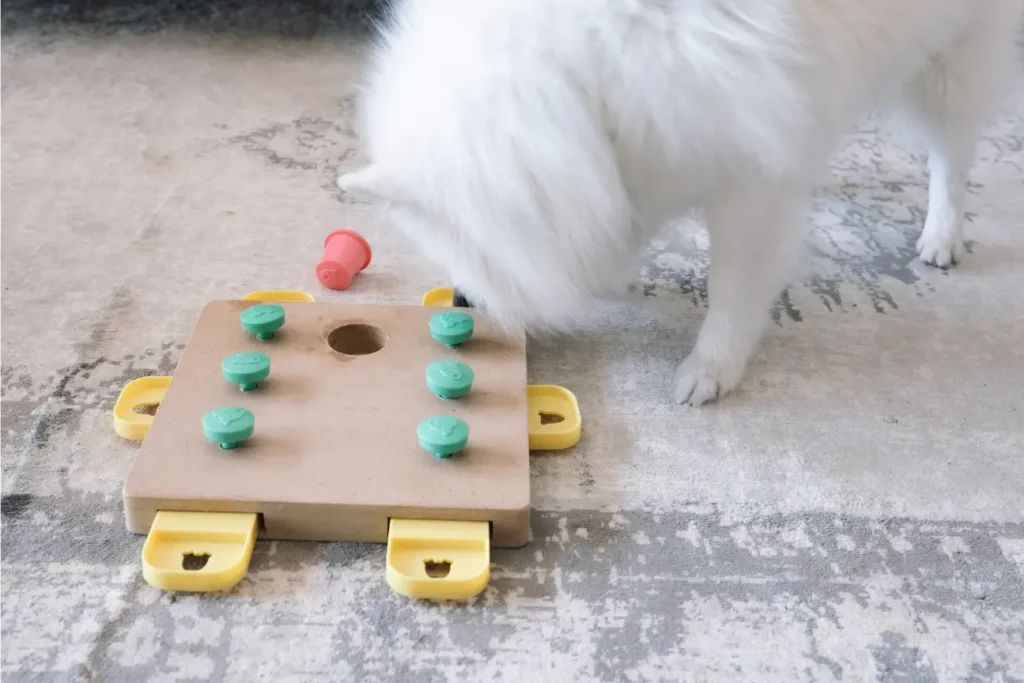
Puzzle toys that require dogs to work for their food or treats provide excellent mental stimulation, and often a fair bit of physical movement as they nudge, paw, and manipulate the toy to access the reward. These are particularly useful for meal times, turning a routine feeding into an engaging activity.
### Obstacle Courses
Using household items, cushions to jump over, a blanket tunnel, chairs to weave between, you can create a simple, safe obstacle course. This engages both body and mind, and many dogs find the novelty particularly stimulating compared to routine exercise.
### The “Find It” Game
Teach your dog to associate the phrase “find it” with searching for scattered treats or kibble across a room or specific area. This game builds on natural scenting instincts and provides a calmer, but still engaging, form of mental exercise, particularly useful for high-energy dogs who need to wind down.
### Basic Training Sessions as Exercise
Short, structured training sessions, working on commands, tricks, or even more advanced skills, provide mental exercise that can be surprisingly tiring for dogs, particularly when combined with movement-based commands like “spin,” “sit-to-stand” repetitions, or “crawl.”
## Indoor Games for Cats
### Interactive Wand Toys
Feather wands or similar interactive toys tap directly into a cat’s hunting instinct, encouraging pouncing, jumping, and chasing behavior. Moving the toy unpredictably, mimicking prey movement, tends to generate the most enthusiastic engagement.
### Laser Pointers (With a Physical Reward at the End)
Laser pointers can provide excellent cardiovascular exercise for cats, though it’s important to end each session by allowing your cat to “catch” something physical, a treat or toy, since failing to provide this resolution can lead to frustration over time.
### Puzzle Feeders
Similar to dogs, cats benefit significantly from puzzle feeders that require some effort to access food or treats. This taps into natural foraging instincts and provides both mental and mild physical engagement during what would otherwise be a passive feeding routine.
### Crinkle Balls and Chase Toys
Simple, lightweight toys that move unpredictably when batted, like crinkle balls or small toy mice, encourage independent play and physical activity, particularly useful for cats who enjoy solo exploration between interactive sessions with their owner.
### Vertical Climbing and Cat Trees
Encouraging vertical movement through cat trees, shelves, or window perches provides valuable physical exercise, since climbing and jumping engage different muscle groups than ground-level play alone.
### DIY Cardboard Mazes
Connecting empty boxes with cut-out doorways creates an engaging maze structure that taps into a cat’s natural curiosity and love of enclosed spaces, encouraging exploration and movement throughout the structure.
### Ping Pong Balls in the Bathtub
For cats who enjoy batting objects around, placing a few lightweight balls in an empty bathtub creates a self-contained play area where the ball’s movement and sound provide engaging, independent stimulation.
## Games for Smaller Pets
### Rabbits: Tunnel and Toss Games
Rabbits enjoy tunnels, cardboard tubes, or fabric tunnels they can run through, along with lightweight toys they can toss and interact with independently. Hiding small treats within safe, chewable enrichment items also encourages natural foraging behavior indoors.
### Guinea Pigs: Foraging Activities
Scattering food throughout a safe play area, rather than serving it in a single bowl, encourages natural foraging movement and mental engagement for guinea pigs during supervised indoor playtime.
### Birds: Foraging Toys and Perch Variety
For pet birds, foraging toys that require manipulation to access treats, along with varied perch heights and textures within their environment, encourage natural movement and mental engagement throughout the day.
## Setting Up a Safe Indoor Play Space
### Clear Potential Hazards
Before engaging in more active indoor games, particularly those involving running or jumping, ensure the space is free from fragile items, sharp edges, or small objects that could pose a choking risk.
### Use Non-Slip Surfaces When Possible
Hardwood or tile floors can be slippery for pets engaging in fast, active movement. Rugs, mats, or designated play areas with better traction help prevent slips and potential injury during energetic play.
### Match Intensity to Your Pet’s Fitness Level
Particularly for senior pets or those with health conditions, moderate the intensity of indoor games accordingly, favoring gentler, puzzle-based activities over high-impact options like jumping or intense chasing games.
## Building a Consistent Indoor Activity Routine
### Rotate Games and Toys Regularly
Just as with outdoor exercise, variety helps maintain engagement over time. Rotating through different games, and periodically introducing new toys or activities, helps prevent boredom from repetitive routines.
### Schedule Short, Frequent Sessions
Rather than relying on one long session, particularly for cats or smaller pets, multiple shorter play sessions throughout the day often align better with natural activity patterns and attention spans.
### Involve the Whole Household
Distributing play sessions among different family members not only lightens the load for any single person but also helps pets build positive associations and bonds with everyone in the household.
## When Indoor Games Aren’t Quite Enough
While indoor games provide valuable exercise and enrichment, they generally work best as a supplement to regular outdoor activity for dogs, rather than a complete, permanent replacement. If circumstances require extended indoor-only periods, extreme weather, recovery from injury, or limited outdoor access, combining a variety of the games above with any safe outdoor time available helps ensure your dog’s overall exercise needs remain reasonably well met.
For cats and smaller pets who may spend most or all of their time indoors regardless of circumstances, building a consistent, varied indoor enrichment routine becomes an essential, ongoing part of their overall care and wellbeing.
## Keeping Pets Engaged, Rain or Shine
Indoor games offer a genuinely valuable way to keep pets physically active and mentally stimulated, regardless of weather, schedule constraints, or living situation. From classic games like hide and seek and tug of war to puzzle feeders and DIY obstacle courses, there’s a wide range of options suited to different pets, energy levels, and living spaces. With a bit of creativity and consistency, indoor play can become just as enriching, and in some cases just as tiring, as time spent outdoors, ensuring your pet stays happy, healthy, and engaged no matter what’s happening outside.
Why Indoor Activity Matters
Physical exercise is only part of what keeps pets healthy and balanced. Mental stimulation plays an equally important role, particularly for intelligent or high-energy animals prone to boredom. Indoor games often combine both elements effectively, engaging a pet’s body and mind simultaneously in ways that repetitive outdoor walks sometimes don’t.
Regular indoor activity helps:
- Burn off excess energy, reducing destructive or restless behavior
- Provide mental enrichment, particularly valuable for intelligent breeds
- Strengthen the bond between pet and owner through interactive play
- Offer a reliable exercise option regardless of weather, schedule, or outdoor access limitations
- Support healthy weight management alongside other exercise sources
Indoor Games for Dogs
Hide and Seek
A simple but genuinely effective game, hide and seek taps into a dog’s natural scenting and seeking instincts. Have your dog sit and stay (or have someone hold them briefly) while you hide in another room, then call their name and encourage them to find you. This game provides both physical movement and mental engagement, and most dogs quickly learn to enjoy the anticipation and reward of the search.
Treat or Toy Hide and Seek
Similar to the game above, but instead of hiding yourself, hide treats or favorite toys around a room or throughout the house. This activity engages your dog’s nose and problem-solving skills, providing excellent mental stimulation even in a relatively confined space.
Tug of War
A classic indoor option, tug of war offers genuine physical exertion in a small footprint. Use a sturdy rope toy, and establish clear rules, such as releasing on command, to keep the game structured and appropriately controlled, particularly important for larger or more excitable dogs.
Fetch Down a Hallway
If you have a long hallway or open living space, a modified indoor version of fetch using a soft toy or ball can provide meaningful exercise, particularly for retrieving breeds who thrive on this type of repetitive, engaging activity.
Stair Fetch
For homes with stairs, tossing a toy or ball up the stairs for your dog to retrieve adds a cardiovascular element to a simple fetch game, offering more intense exercise in a smaller physical space than flat-ground fetch alone.
Puzzle Feeders and Treat-Dispensing Toys
Puzzle toys that require dogs to work for their food or treats provide excellent mental stimulation, and often a fair bit of physical movement as they nudge, paw, and manipulate the toy to access the reward. These are particularly useful for meal times, turning a routine feeding into an engaging activity.
Obstacle Courses
Using household items, cushions to jump over, a blanket tunnel, chairs to weave between, you can create a simple, safe obstacle course. This engages both body and mind, and many dogs find the novelty particularly stimulating compared to routine exercise.
The “Find It” Game
Teach your dog to associate the phrase “find it” with searching for scattered treats or kibble across a room or specific area. This game builds on natural scenting instincts and provides a calmer, but still engaging, form of mental exercise, particularly useful for high-energy dogs who need to wind down.
Basic Training Sessions as Exercise
Short, structured training sessions, working on commands, tricks, or even more advanced skills, provide mental exercise that can be surprisingly tiring for dogs, particularly when combined with movement-based commands like “spin,” “sit-to-stand” repetitions, or “crawl.”
Indoor Games for Cats
Interactive Wand Toys
Feather wands or similar interactive toys tap directly into a cat’s hunting instinct, encouraging pouncing, jumping, and chasing behavior. Moving the toy unpredictably, mimicking prey movement, tends to generate the most enthusiastic engagement.
Laser Pointers (With a Physical Reward at the End)
Laser pointers can provide excellent cardiovascular exercise for cats, though it’s important to end each session by allowing your cat to “catch” something physical, a treat or toy, since failing to provide this resolution can lead to frustration over time.
Puzzle Feeders
Similar to dogs, cats benefit significantly from puzzle feeders that require some effort to access food or treats. This taps into natural foraging instincts and provides both mental and mild physical engagement during what would otherwise be a passive feeding routine.
Crinkle Balls and Chase Toys
Simple, lightweight toys that move unpredictably when batted, like crinkle balls or small toy mice, encourage independent play and physical activity, particularly useful for cats who enjoy solo exploration between interactive sessions with their owner.
Vertical Climbing and Cat Trees
Encouraging vertical movement through cat trees, shelves, or window perches provides valuable physical exercise, since climbing and jumping engage different muscle groups than ground-level play alone.
DIY Cardboard Mazes
Connecting empty boxes with cut-out doorways creates an engaging maze structure that taps into a cat’s natural curiosity and love of enclosed spaces, encouraging exploration and movement throughout the structure.
Ping Pong Balls in the Bathtub
For cats who enjoy batting objects around, placing a few lightweight balls in an empty bathtub creates a self-contained play area where the ball’s movement and sound provide engaging, independent stimulation.
Games for Smaller Pets
Rabbits: Tunnel and Toss Games
Rabbits enjoy tunnels, cardboard tubes, or fabric tunnels they can run through, along with lightweight toys they can toss and interact with independently. Hiding small treats within safe, chewable enrichment items also encourages natural foraging behavior indoors.
Guinea Pigs: Foraging Activities
Scattering food throughout a safe play area, rather than serving it in a single bowl, encourages natural foraging movement and mental engagement for guinea pigs during supervised indoor playtime.
Birds: Foraging Toys and Perch Variety
For pet birds, foraging toys that require manipulation to access treats, along with varied perch heights and textures within their environment, encourage natural movement and mental engagement throughout the day.
Setting Up a Safe Indoor Play Space
Clear Potential Hazards
Before engaging in more active indoor games, particularly those involving running or jumping, ensure the space is free from fragile items, sharp edges, or small objects that could pose a choking risk.
Use Non-Slip Surfaces When Possible
Hardwood or tile floors can be slippery for pets engaging in fast, active movement. Rugs, mats, or designated play areas with better traction help prevent slips and potential injury during energetic play.
Match Intensity to Your Pet’s Fitness Level
Particularly for senior pets or those with health conditions, moderate the intensity of indoor games accordingly, favoring gentler, puzzle-based activities over high-impact options like jumping or intense chasing games.
Building a Consistent Indoor Activity Routine
Rotate Games and Toys Regularly
Just as with outdoor exercise, variety helps maintain engagement over time. Rotating through different games, and periodically introducing new toys or activities, helps prevent boredom from repetitive routines.
Schedule Short, Frequent Sessions
Rather than relying on one long session, particularly for cats or smaller pets, multiple shorter play sessions throughout the day often align better with natural activity patterns and attention spans.
Involve the Whole Household
Distributing play sessions among different family members not only lightens the load for any single person but also helps pets build positive associations and bonds with everyone in the household.
When Indoor Games Aren’t Quite Enough
While indoor games provide valuable exercise and enrichment, they generally work best as a supplement to regular outdoor activity for dogs, rather than a complete, permanent replacement. If circumstances require extended indoor-only periods, extreme weather, recovery from injury, or limited outdoor access, combining a variety of the games above with any safe outdoor time available helps ensure your dog’s overall exercise needs remain reasonably well met.
For cats and smaller pets who may spend most or all of their time indoors regardless of circumstances, building a consistent, varied indoor enrichment routine becomes an essential, ongoing part of their overall care and wellbeing.
Keeping Pets Engaged, Rain or Shine
Indoor games offer a genuinely valuable way to keep pets physically active and mentally stimulated, regardless of weather, schedule constraints, or living situation. From classic games like hide and seek and tug of war to puzzle feeders and DIY obstacle courses, there’s a wide range of options suited to different pets, energy levels, and living spaces. With a bit of creativity and consistency, indoor play can become just as enriching, and in some cases just as tiring, as time spent outdoors, ensuring your pet stays happy, healthy, and engaged no matter what’s happening outside.

yespaws
Recent Posts
-
 How to Manage Pets in Small Apartments September 12, 2026
 -
 How Much Exercise Does Your Dog Really Need September 10, 2026
 -
 First-Time Cat Owner? Here’s How to Groom Your Cat Safely September 9, 2026
 -
 Safety Tips for Night Walks with Dogs September 8, 2026
 -
 Why Cats Love Boxes So Much September 7, 2026